12 years of ATRIUM’s work
on Symbol residential district

Symbol residential district by ATRIUM is one of the flagship projects for the integrated redevelopment of Moscow’s former industrial zones. The architectural studio has been developing the project for more than ten years. On the 60-hectare site of the former Serp i Molot plant, a lively mixed-use district is gradually taking shape, with housing, extensive green spaces, social infrastructure and its own urban logic.
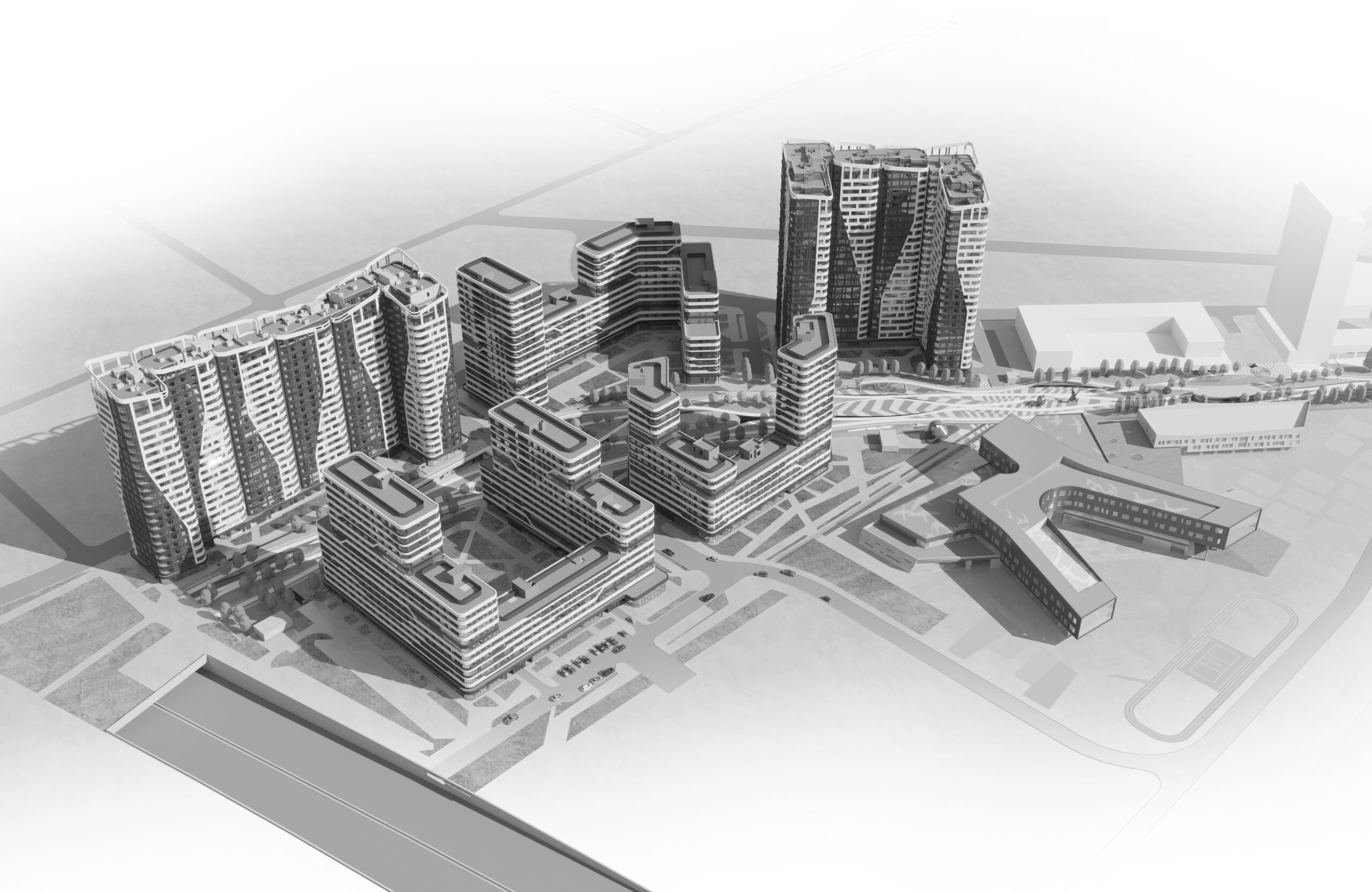
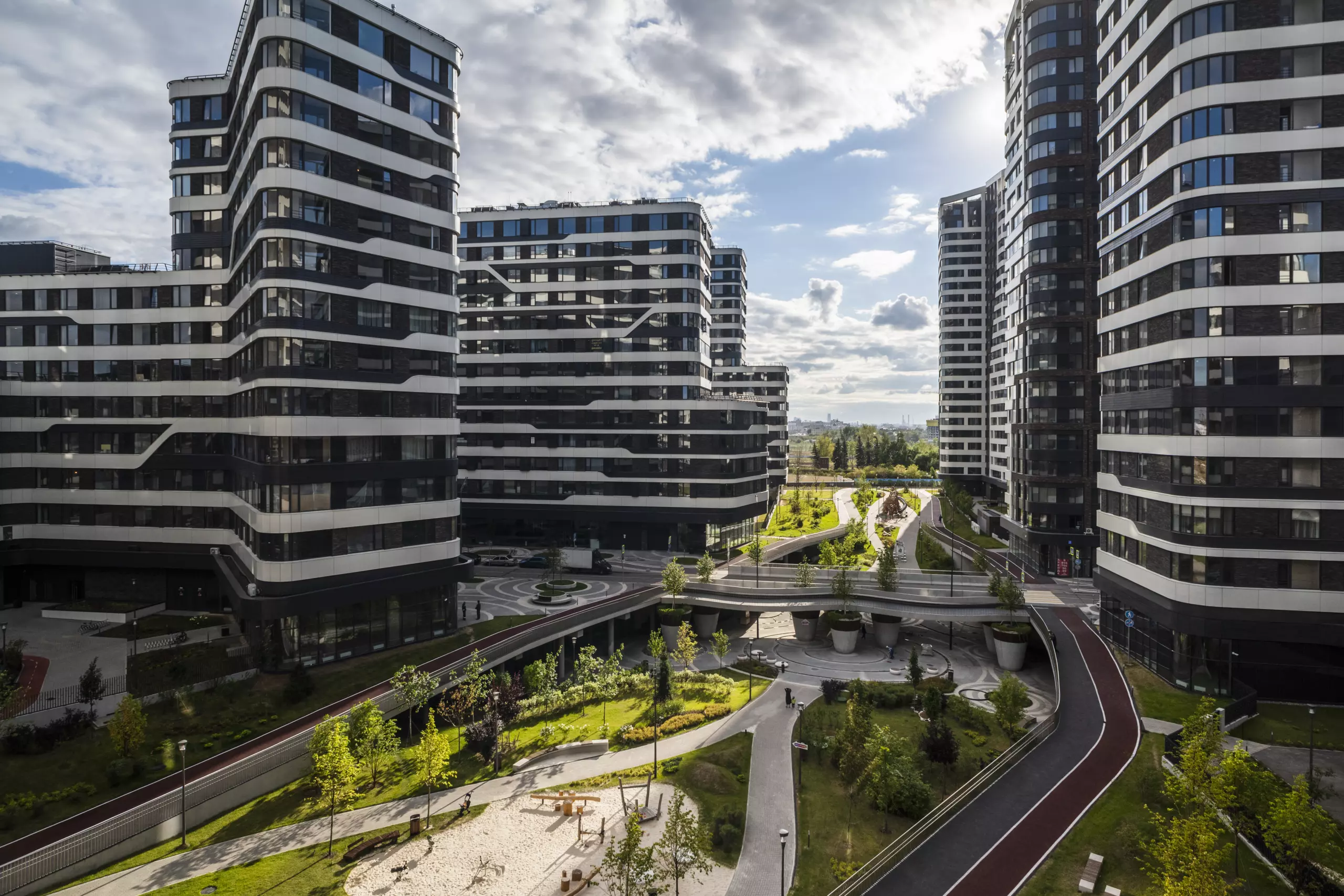
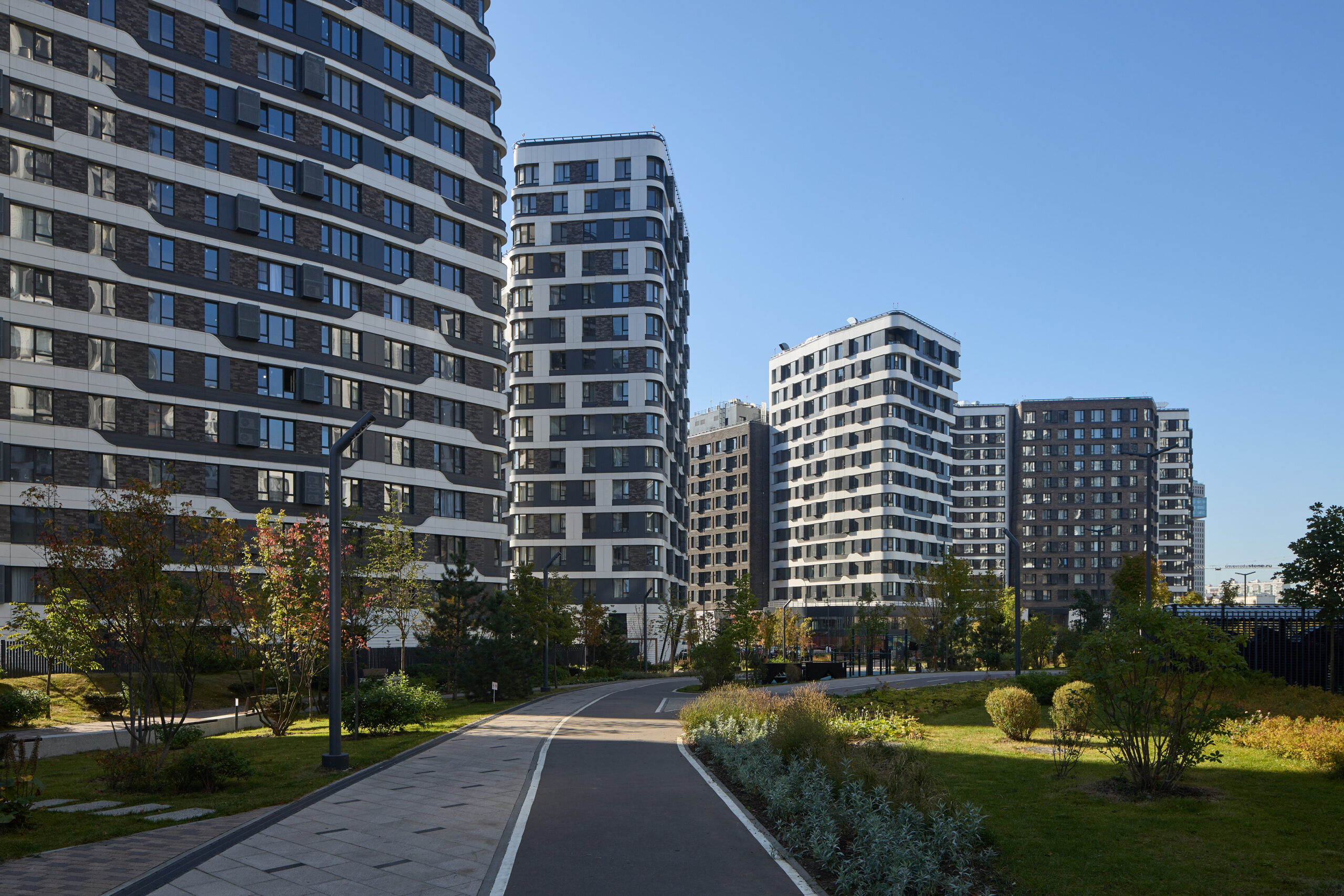
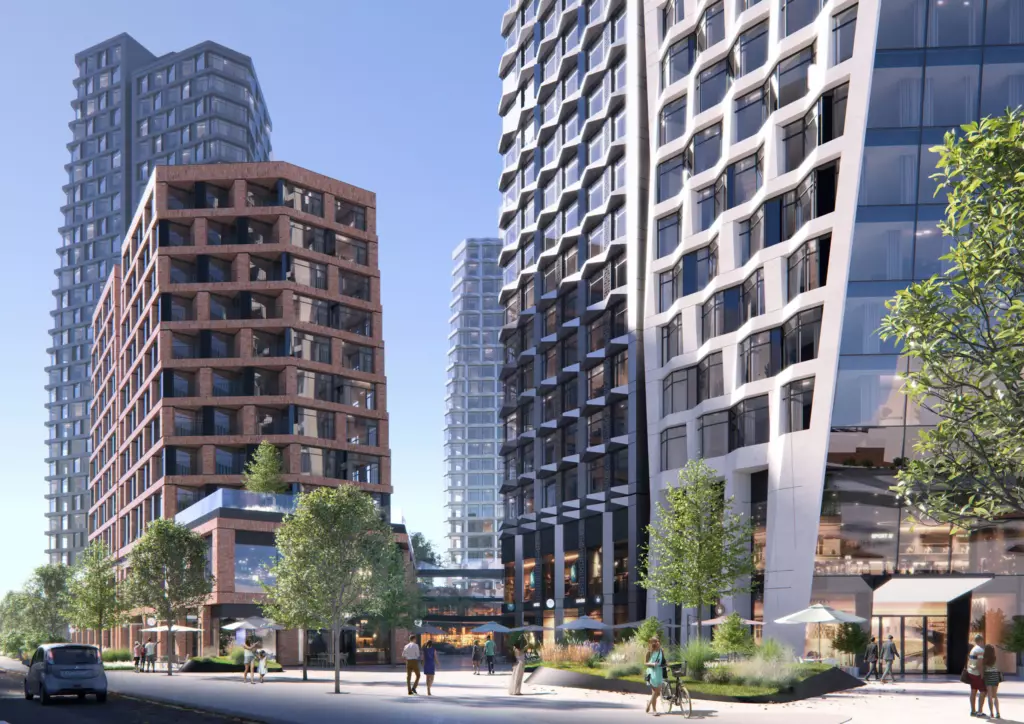
Symbol is conceived as a self-sufficient neighbourhood for around 19,000 residents. Its expressive residential buildings are arranged along a central boulevard — a winding park promenade that forms the spatial backbone of the entire project. Dynamic asymmetrical U-shaped forms, soft corners and varied heights — from mid-rise volumes of 5–17 storeys to 21–27-storey towers — create a complex silhouette visible from different points in the city. At ground level, the district opens up to Moscow: the lower floors are filled with retail and public functions, giving the streets an active frontage, a lively rhythm and constant pedestrian movement.
integrated approach

project history
The redevelopment of the former Serp i Molot plant was conceived from the outset as a large, multi-stage project involving several architectural teams. At an early stage, the client, Donstroy, held an international competition for the territory’s design code. After the competition, further work on the masterplan was continued by the British studios LDA Design and UHA London, who proposed the key urban idea: a “city within a city” organised around a single green axis.
This is how Green River emerged — an extended public space that became the district’s main spatial framework. It works as a pedestrian and landscape system, connecting residential quarters, social infrastructure, commercial functions and recreational areas.
ATRIUM was initially invited to design one of the quarters in the first phase. During the design process, however, it became clear that the studio could develop the district as a coherent, expressive and technically precise architectural system.

Freedom quarter,
1st Phase
While working on the first Freedom quarter within Symbol residential district, ATRIUM did not simply follow the original design code. The studio proposed an architectural solution in which the facade dynamics, spatial connectivity, character of the public areas and overall coherence of the environment were developed in a more consistent and expressive way.
After the completion of the first phase, it became clear that the project had become one of the most successful on the Moscow real estate market. Freedom quarter achieved leading sales figures and effectively set a new benchmark for the further development of the district.

School
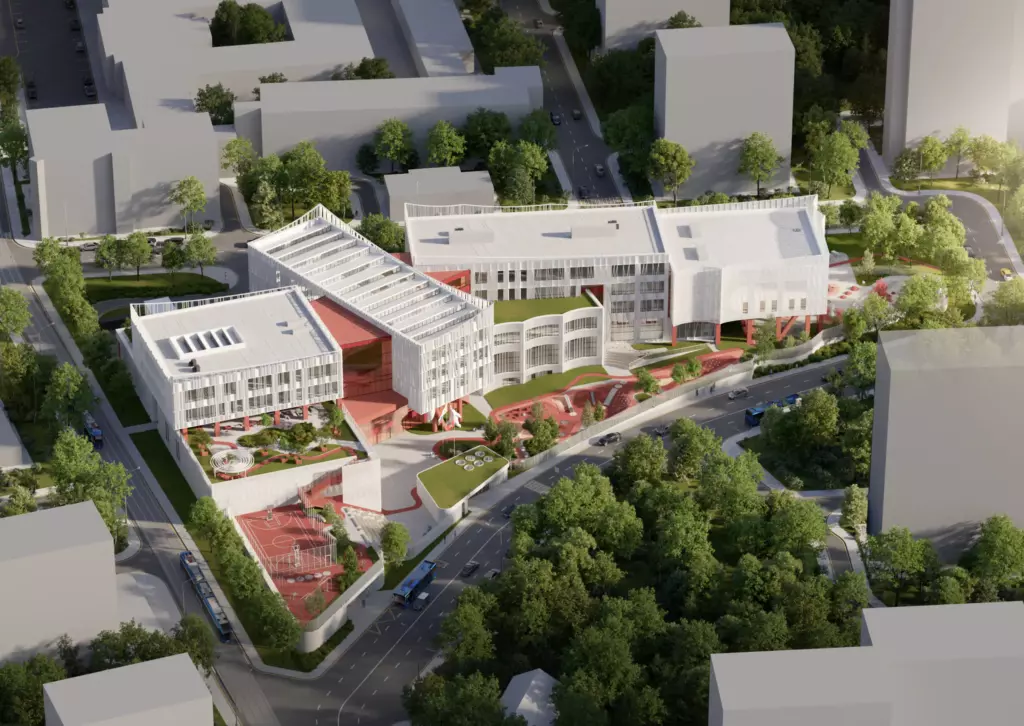
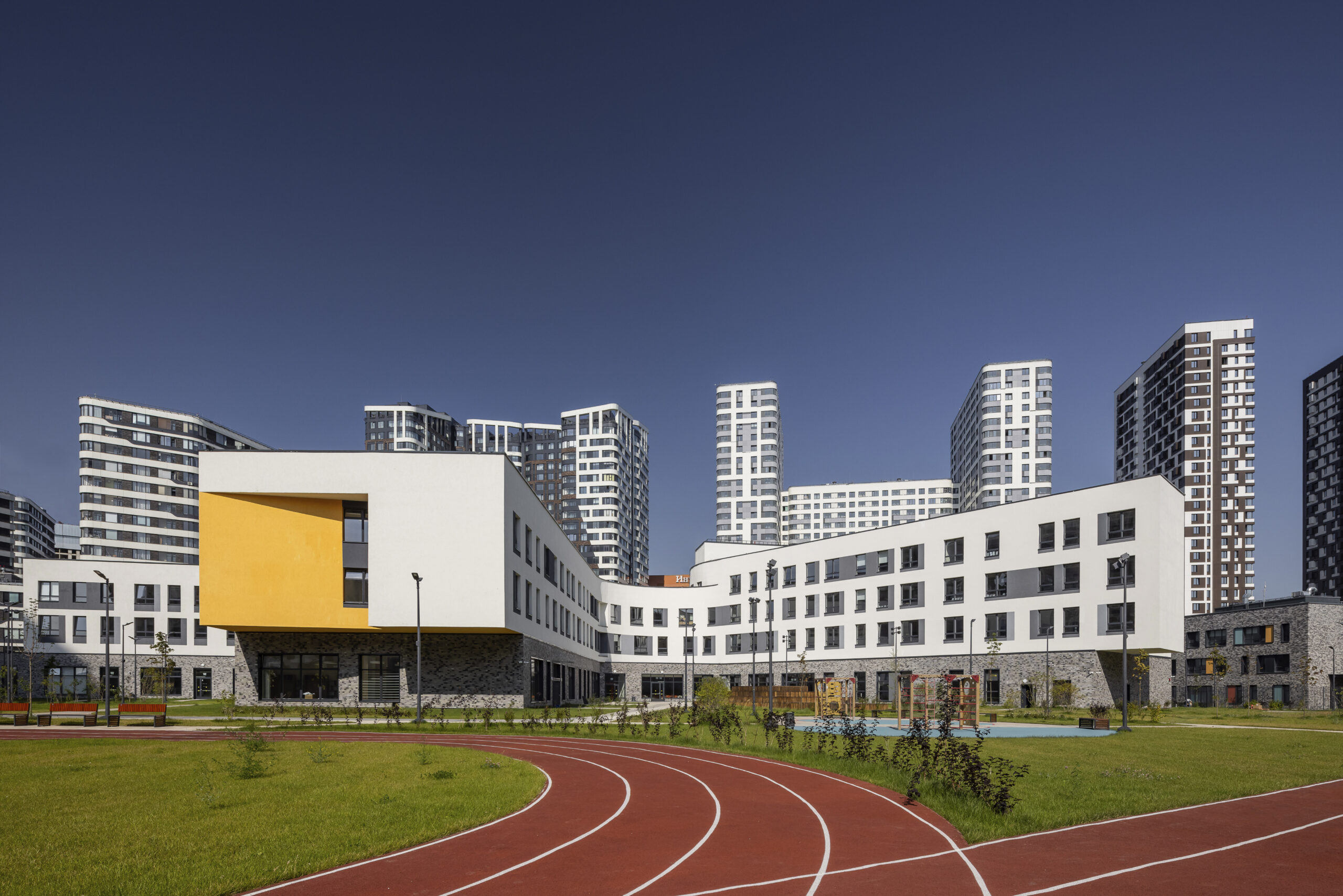
Bauman Engineering School № 1580 in Symbol residential district became a continuation of ATRIUM’s extensive work with the former Serp i Molot plant site and one of the studio’s key projects in educational architecture. Designed for 1,225 students, the school is integrated into the new district and acts as one of Symbol’s public anchors. A square for gatherings and events is formed in front of the main entrance; separate entrances lead to the primary school, sports block and media library, while the two-level media library can be used by local residents outside school hours.
The key feature of the project is the organisation of the school as a mini-city, where learning extends beyond the classroom and takes on a complex spatial structure. Five functional blocks — sports and medical facilities, primary school, middle and senior school with workshops, an information centre with an auditorium, and a recreational block — are brought together in a zigzag composition. The central atrium, with its open staircase and amphitheatre, becomes the main internal focus: a place for meetings, events, spontaneous communication and encounters between students of different ages.

Green River Park
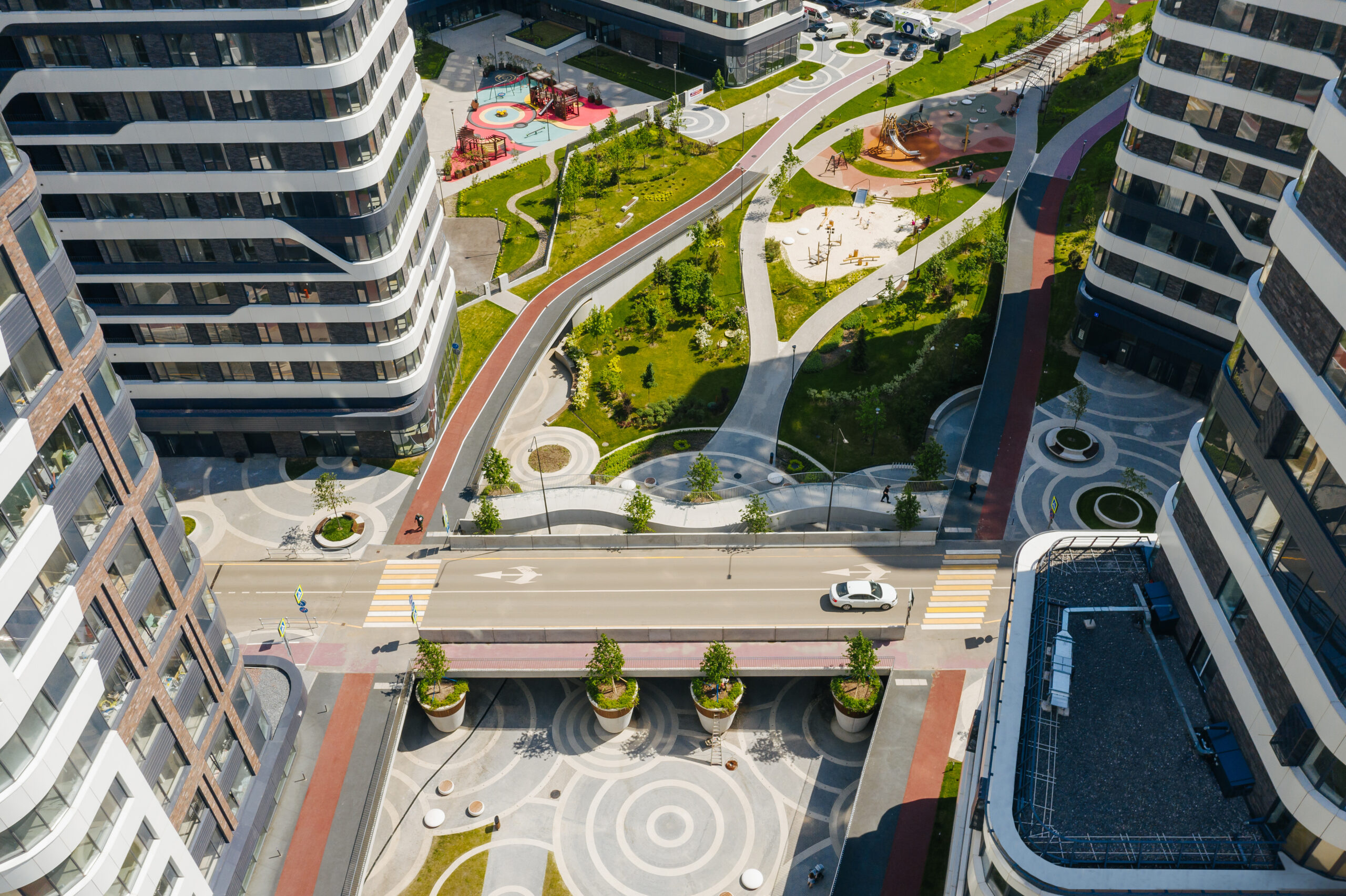
Green River Park became the spatial foundation of Symbol Residential District and a key element in the integrated transformation of the former Serp i Molot plant site. According to the concept, almost 40% of the district is allocated to green public spaces, with a two-kilometre green axis forming the main connecting framework. Residential quarters, social infrastructure, commercial functions and recreational areas all face onto it.
The park brings together different scenarios — walking, sport, children’s play, meetings and outdoor work — into a continuous spatial sequence. A special role is played by the vehicular-pedestrian bridge: it connects different parts of the district, extends the park on an upper level, and creates a sheltered “urban living room” beneath it, with public functions, swings and space for city events.
Kindergarten
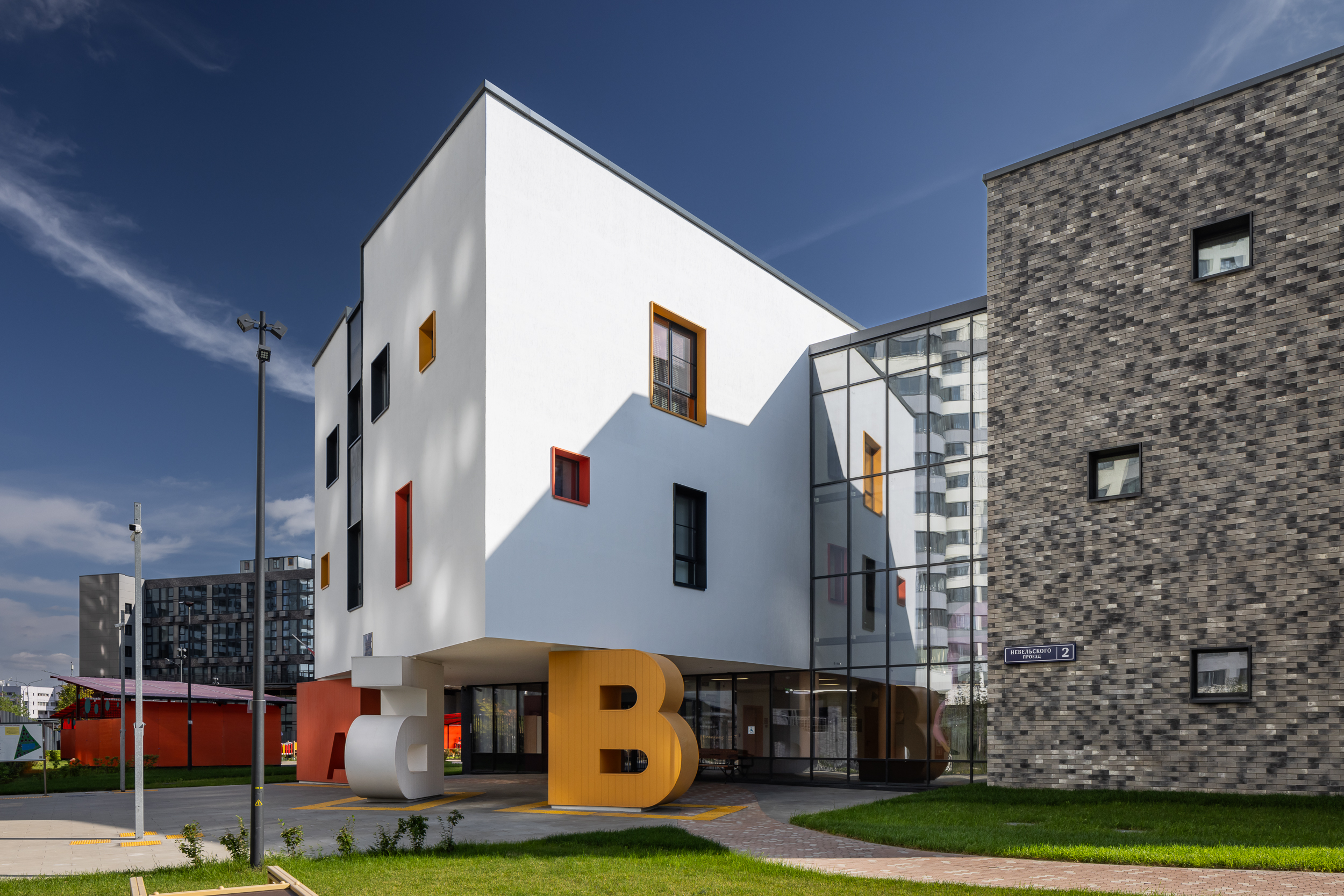
The 330-place kindergarten in Symbol residential district complements the system of educational and public spaces within the new district. It is located on an irregular triangular site and consists of two blocks connected by a glazed passage, allowing the building to fit precisely into its context while maintaining a clear internal organisation.
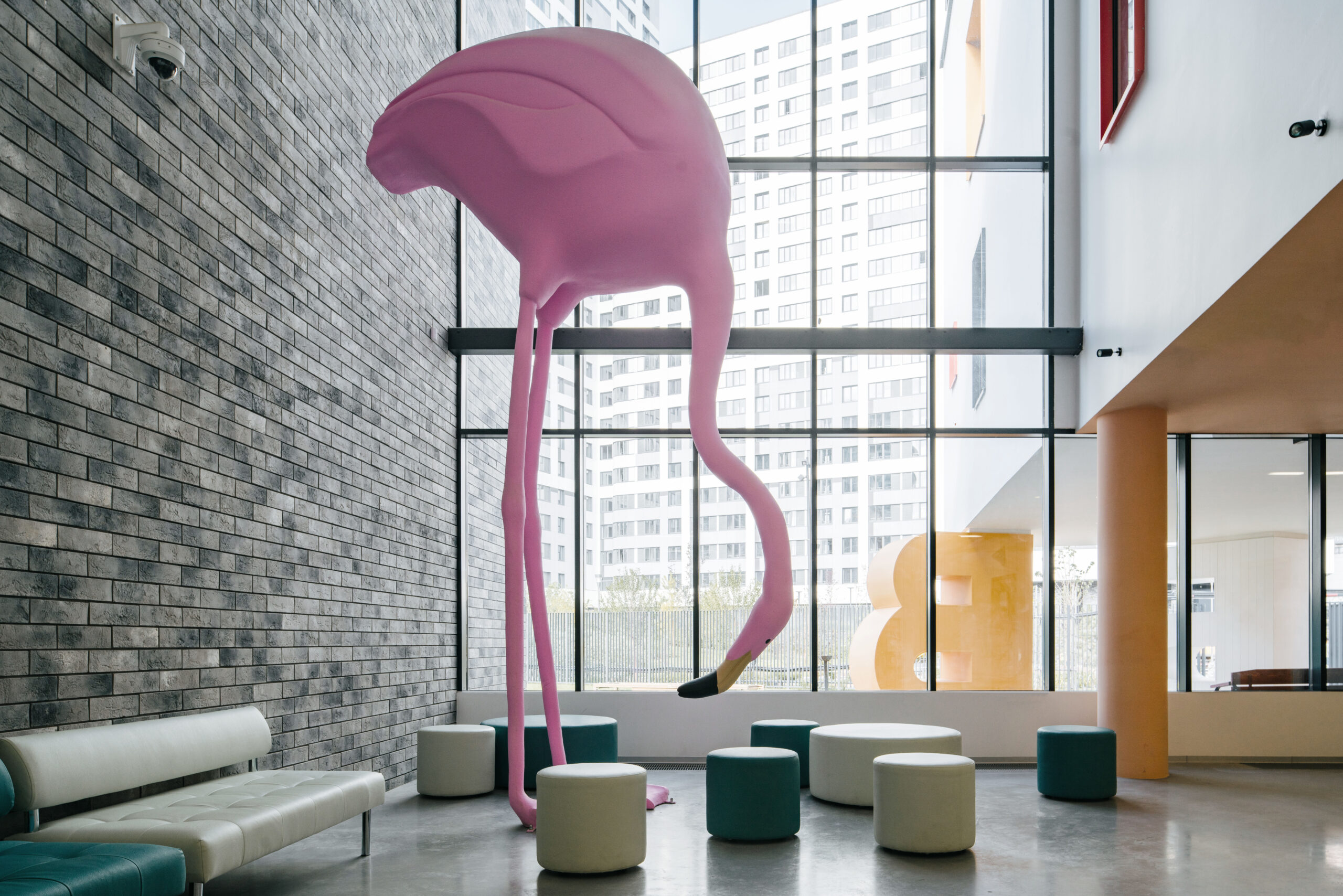
Inside, the kindergarten is organised as a rich yet clear environment for child development. A spacious triple-height hall with the Flamingo art object becomes the building’s central public space, while the group rooms are distributed across the floors according to the children’s age. Transformable partitions in the group rooms allow the scenarios to shift between play, learning and rest, while the neutral colour base of the interiors avoids overloading perception.

Sincerity quarter,
2nd Phase
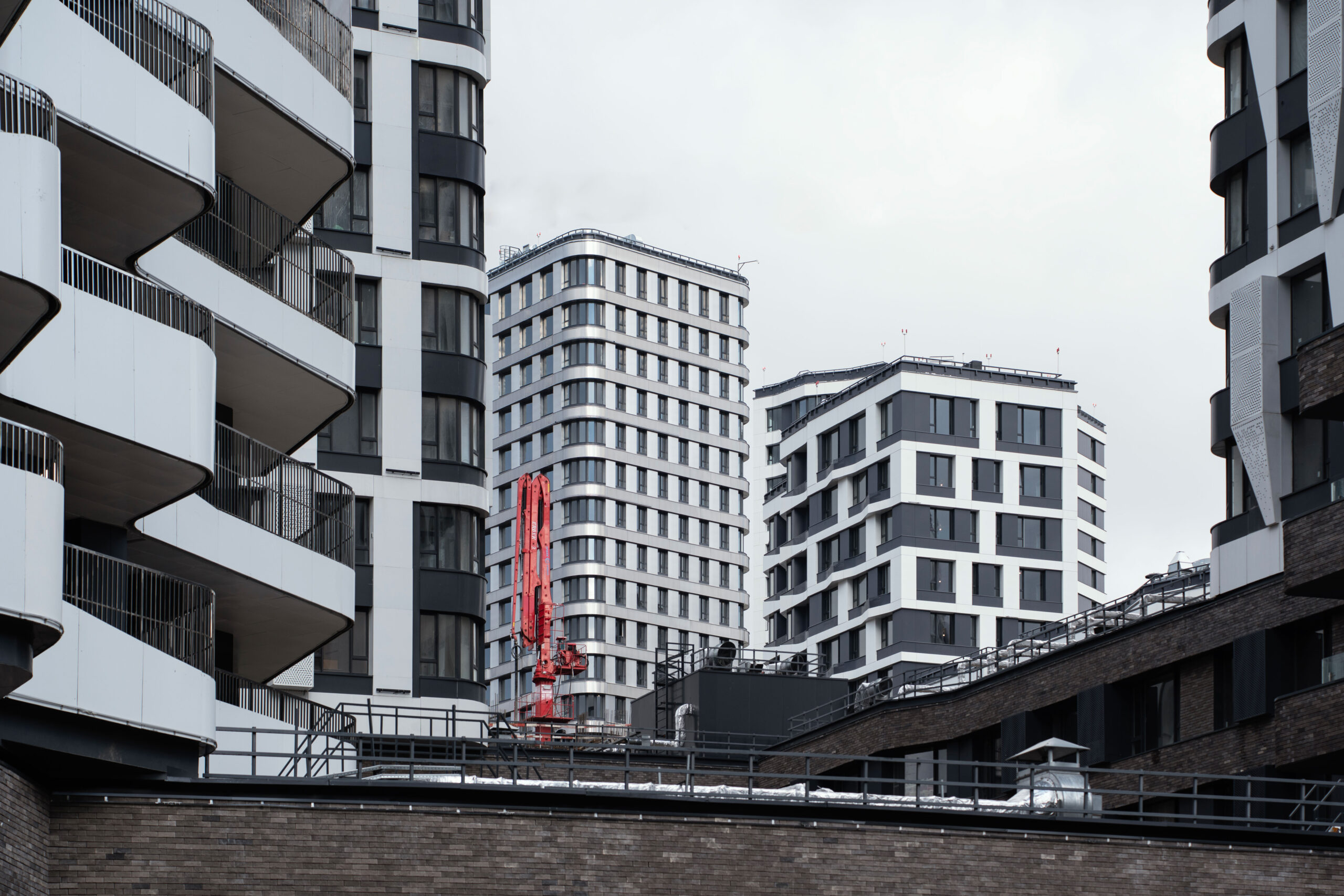
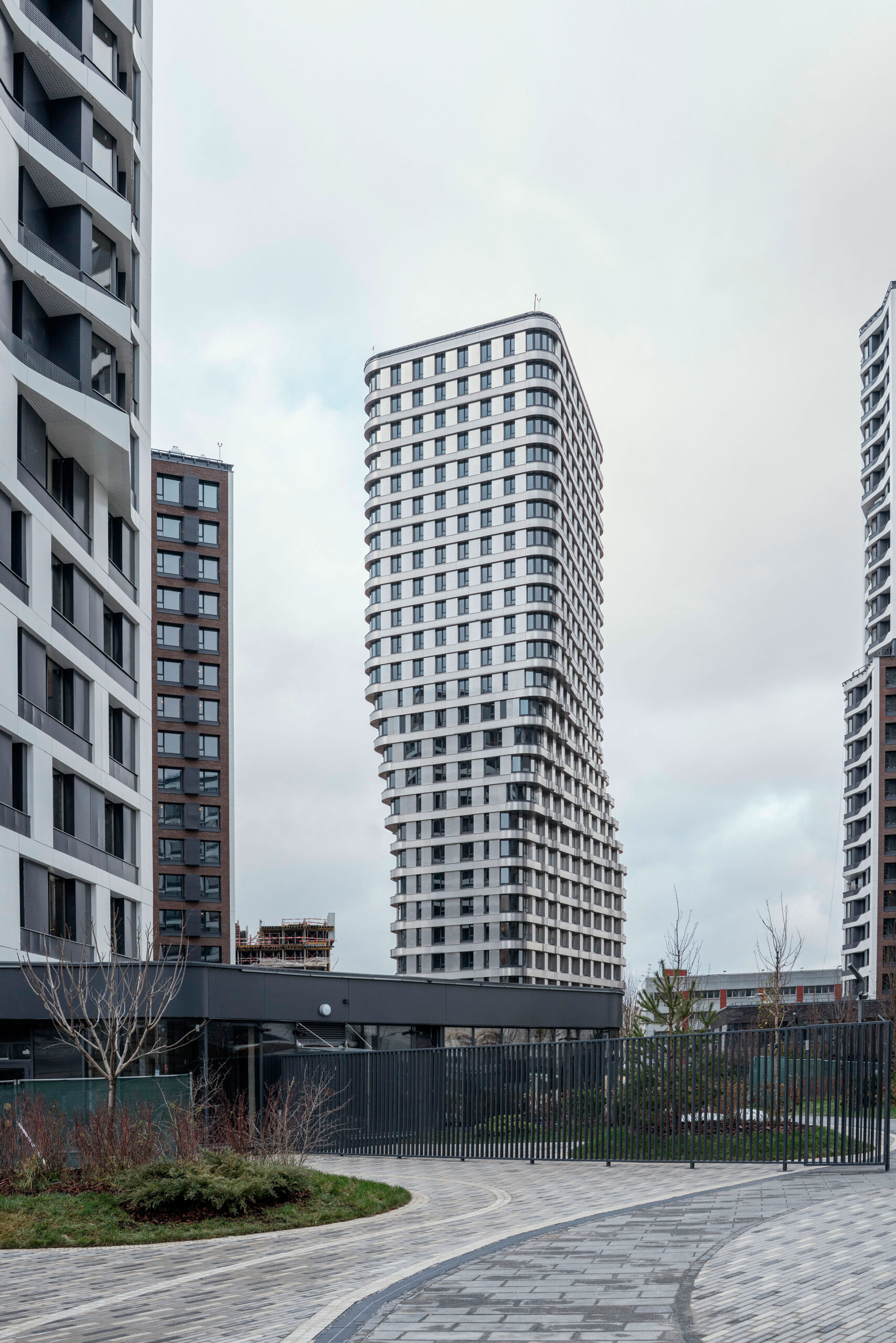
Sincerity quarter reveals the next stage of ATRIUM’s integrated work with the new part of Lefortovo, located closer to Moscow’s historic centre. The composition of the second phase has a more intimate scale, with buildings ranging from 6 to 22 storeys. The main idea of this phase is based on two different riverbanks, as in a real river. This natural principle is translated into the architecture, silhouette, facades, landscape and interiors.
The southern, darker bank is designed as a more horizontal development, with buildings raised on “legs”. The sections are shifted in relation to one another, creating the feeling of a dense yet human-scaled urban fabric, close in scale to European quarters. On the opposite, northern bank, lighter vertical towers with sunny terraces rise from a dark four-storey brick stylobate. Their elongated proportions are emphasised by the vertical rhythm of the facades, while the ground floors contain city villas — multi-level apartments with terraces and views of Green River. Kindergartens with complex, fluid geometry are also integrated into the structure of the residential buildings here.
Inspiration quarter,
3rd Phase
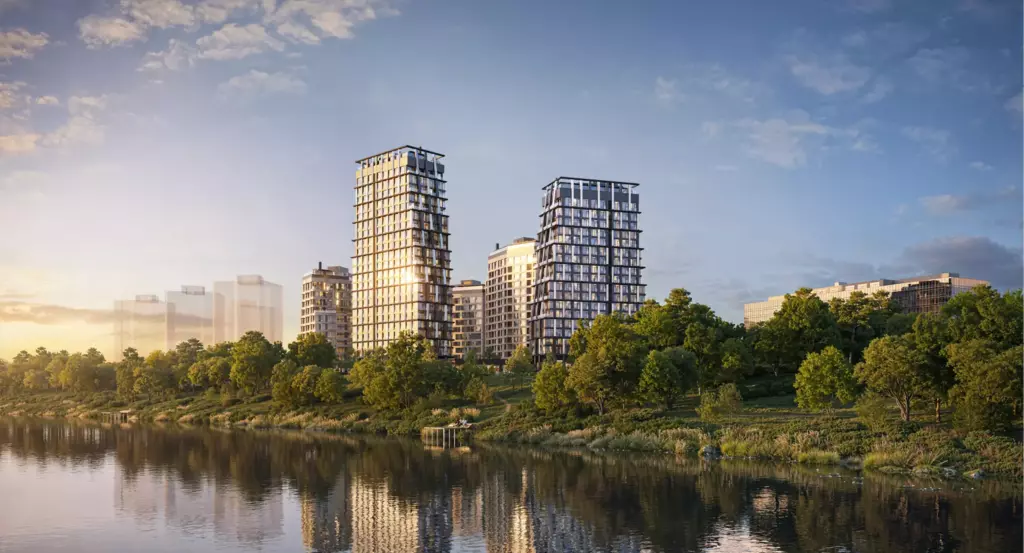
Inspiration quarter continues the development of the futuristic image of Symbol Residential District on the site of the former Serp i Molot plant. Through the integrated design of the masterplan, architecture, landscape and shared interior spaces, the new quarter is perceived as a coherent artistic statement, where residential buildings, courtyards, streets and the park follow a single spatial logic.
The buildings are grouped around two large enclosed courtyards with planting, children’s playgrounds, outdoor fitness equipment, residents’ infrastructure and two integrated kindergartens. In Pride Quarter, the architecture is based on a combination of the angular geometry of the sectional buildings and three fluid high-rise volumes clad in mirrored composite panels.
The complex configuration of the buildings and the need to provide the apartments with sufficient natural light shaped a large number of non-standard layouts, including apartments with bay windows and increased floor-to-ceiling heights.
news
Ostrov named Best Business-Class Project in the International REPA 2026
Manery residential complex wins Urban Awards
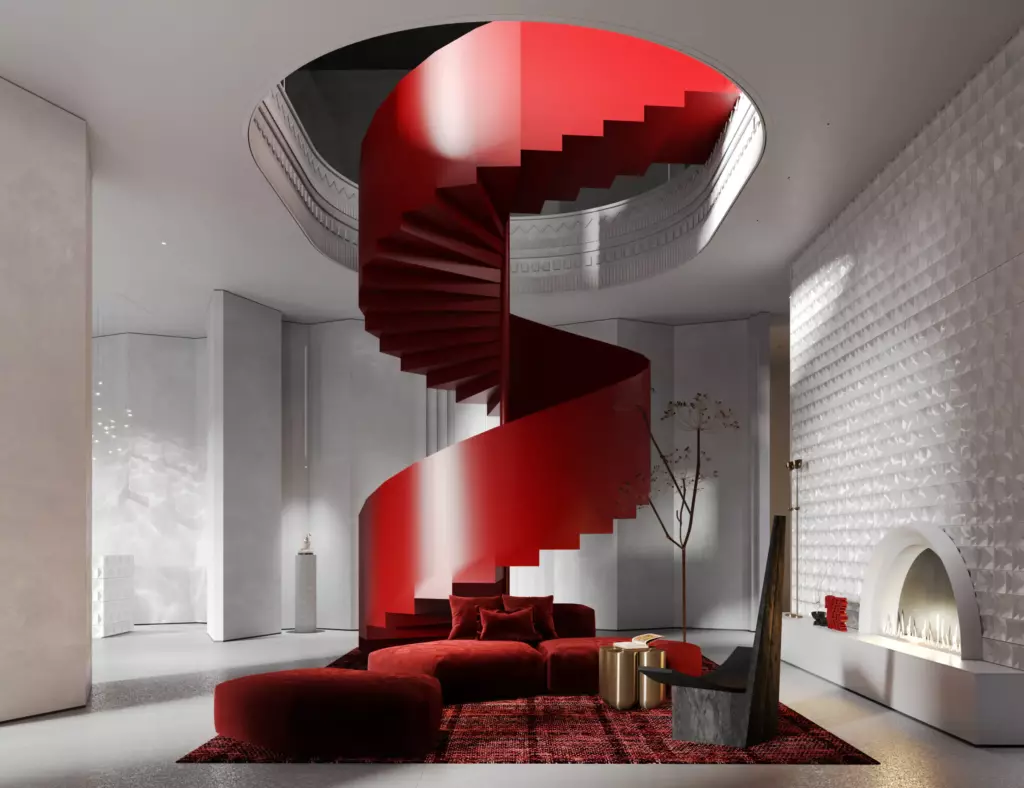
The interiors of Uzory club house win the Archpoint Concept Awards 2026
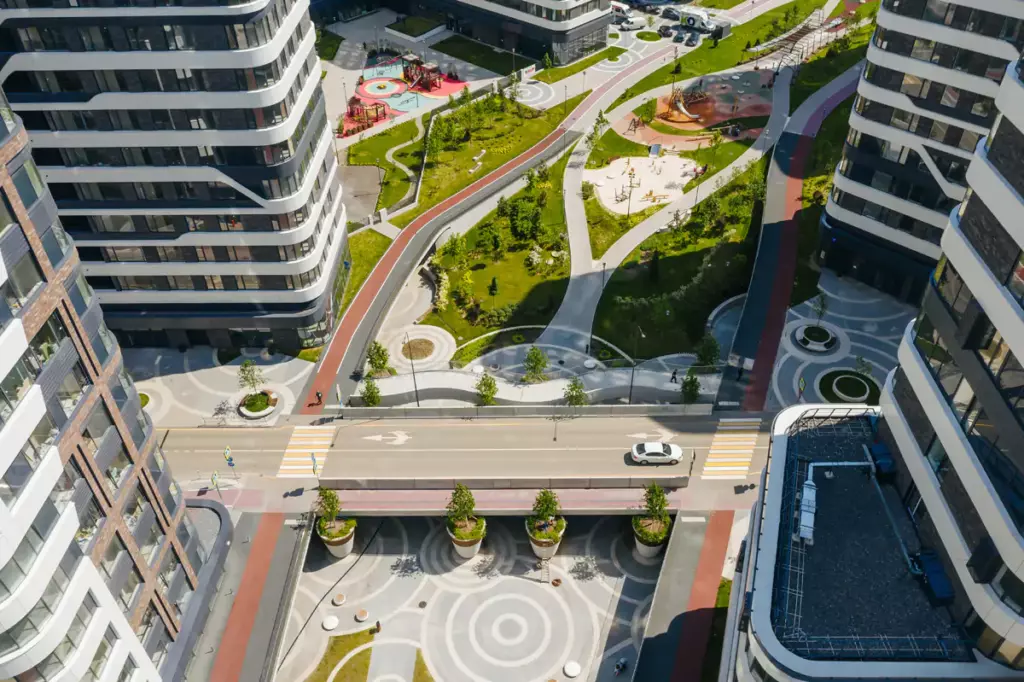
Green River Park in the Symbol Residential Complex