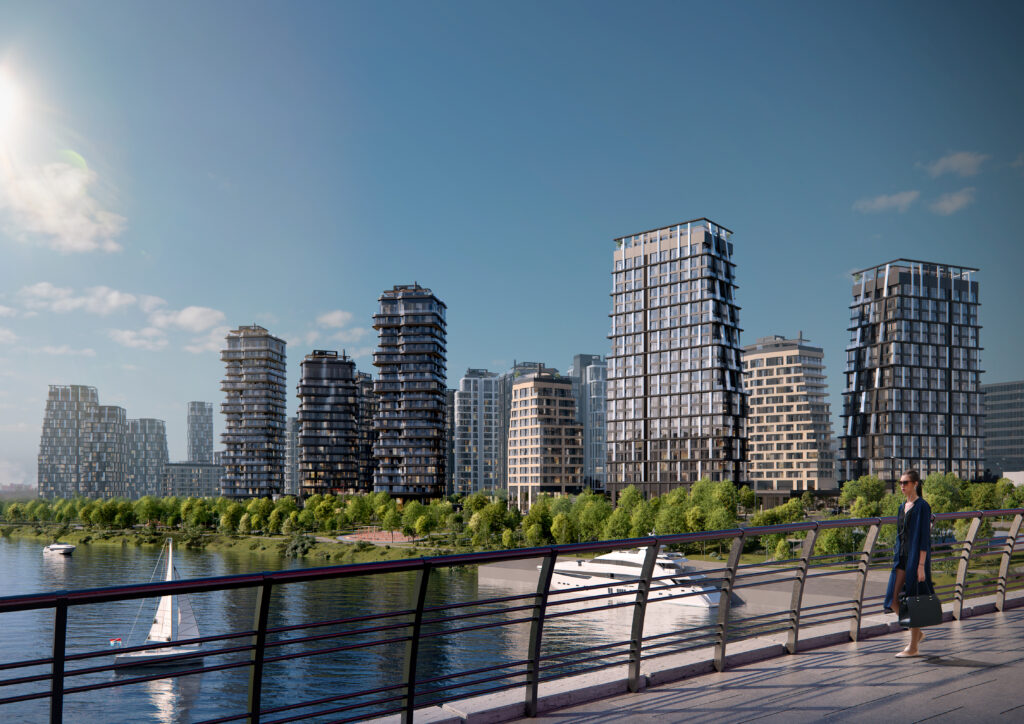
Concept for the Development of the Historic Centre of Chelyabinsk
- location
- Russia, Chelyabinsk
- design
- 2016
Chelyabinsk is a city whose Soviet-period masterplan is considered one of the outstanding examples reflecting the finest traditions of the Soviet urban planning school of the 1960s and 1970s. During these years, Moscow’s masterplan was based on the idea of dividing the city into planning districts incorporating a system of public centres — an approach intended to improve everyday living conditions for citizens and enhance their quality of life, while the historic centre was understood as the city’s central public core. The continuity of these ideas was also reflected in the masterplan of Chelyabinsk.
Since then, however, many changes have taken place in the city’s development. The perestroika period left its chaotic traces in the urban fabric, disrupting the integrity and clarity of Soviet ideas about an ideal planning structure. A new need emerged to develop a masterplan for this city of over one million inhabitants. As early as the 1970s and 1980s, within the theory of urbanisation described by Leonid Kogan, a particular feature of the socio-spatial development of cities was identified: the constant interaction between centre and periphery, whereby the city’s cultural values are concentrated in the centre and later spread to other territories.
It was within the framework of these urban ideas that the urban planning competition for the architectural and urban development concept of Chelyabinsk’s historic centre was held. If the city, as a living organism, is in an unhealthy state, it is logical to begin with its “heart”, where social and cultural life is concentrated. Today, the centre of Chelyabinsk — both in terms of its appearance and the quality of its public realm and comfort — does not correspond to the status of a contemporary city of over one million inhabitants. The competition brief stated that its aim was “to develop a Concept that will form the basis for the creation of a new city masterplan and serve as the foundation for the subsequent preparation of territory planning documentation”. Three specific objectives were highlighted for the concept: improving the ecological situation, preserving the unique historic environment of the central part of the city, and strengthening its tourist appeal. However, having carried out a pre-design study, ATRIUM’s architects also identified serious socio-demographic issues. As a result, the final conceptual proposals went beyond the development of the centre alone and were aimed, above all, at creating a city attractive to its residents rather than to tourists.
The main idea was the synergistic development of the city. The city’s public centres, identified according to their functional intensity and citywide significance, were selected as synergising factors: the cultural and historic centre, the educational centre — South Ural State University has around 50,000 students — the sports centre, the retail and entertainment centre, and the emerging multifunctional business centre. Urban development is, of course, nonlinear, but a qualitatively new synergistic development depends on correctly identifying the city’s launch point. In the architects’ concept, this point should be a research and innovation centre, since Chelyabinsk has all the resources needed for its development — both intellectual and industrial.
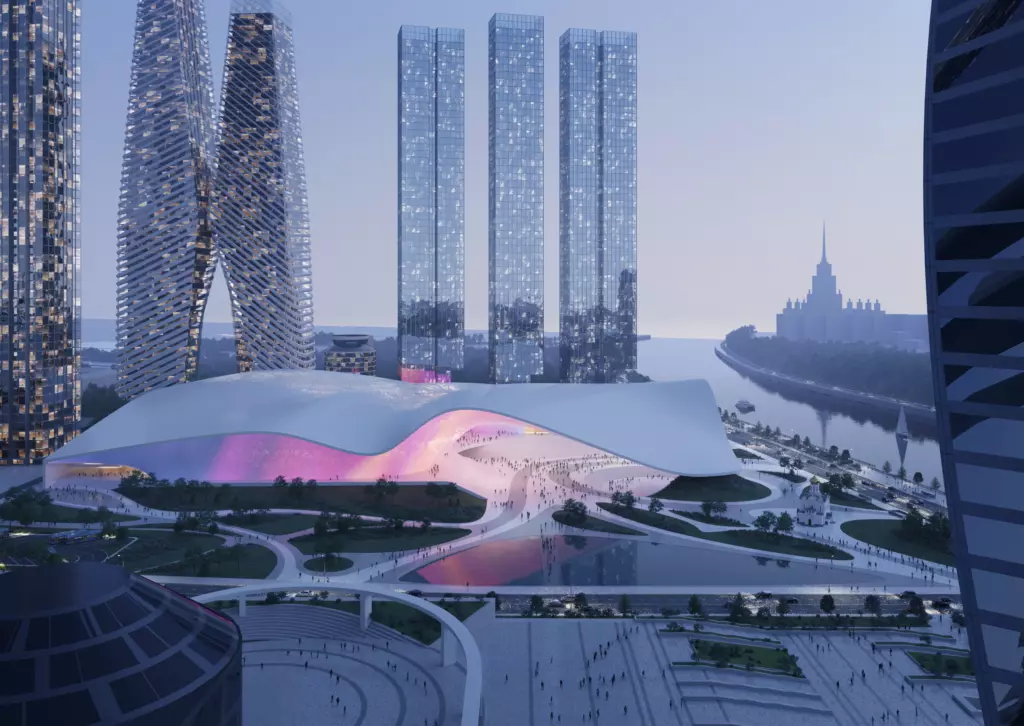
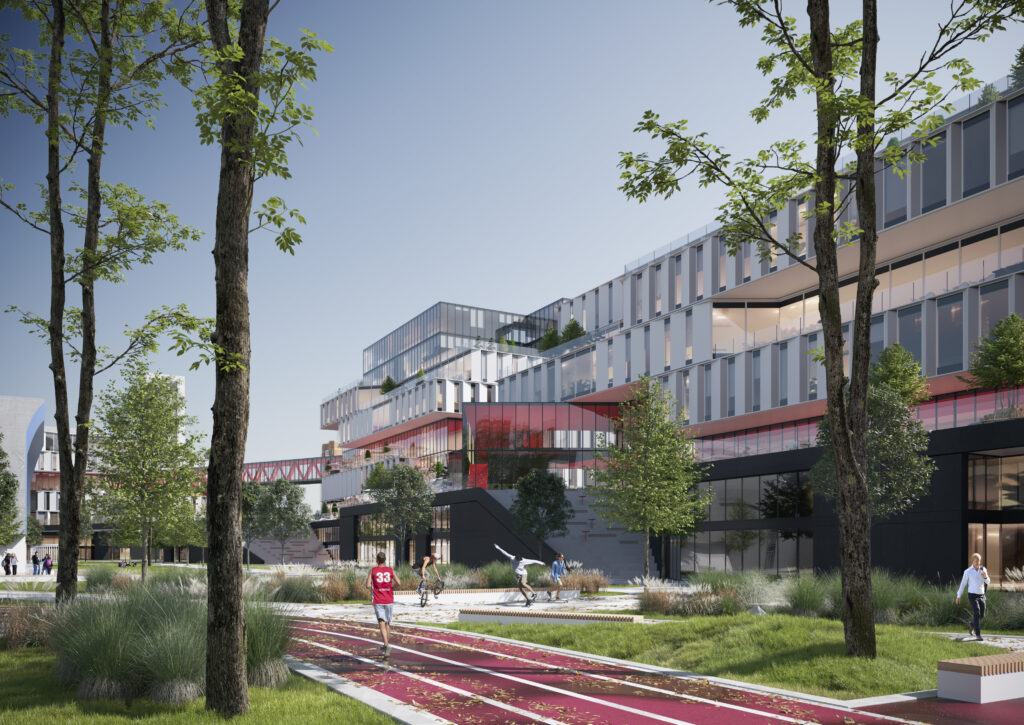
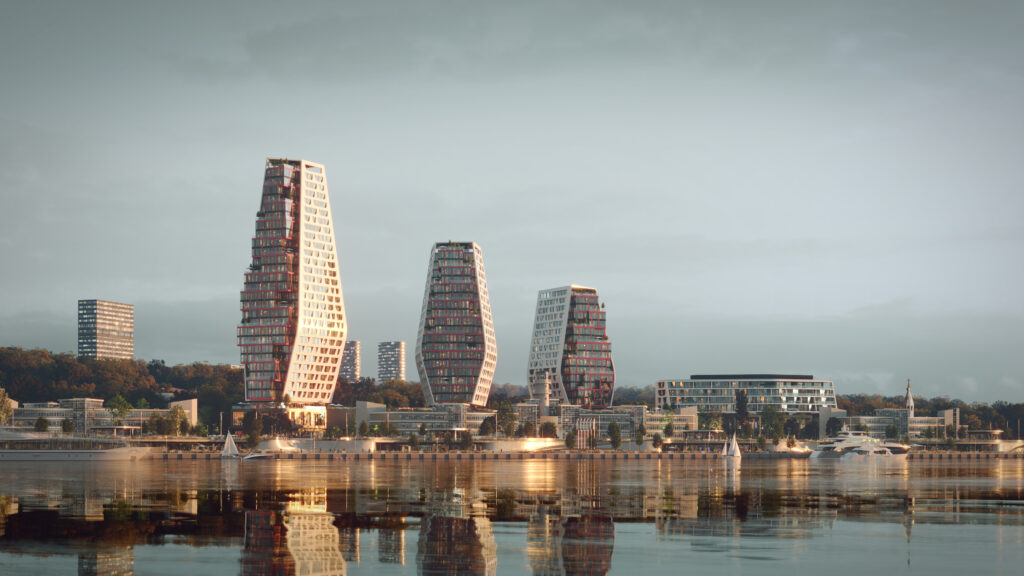
The Research and Innovation Centre could become a driver of the city’s economic development. Large businesses, whose offices could be located in the new business centre by the bend of the Miass River — an area that had already appeared as a high-rise development zone in the masterplans of Soviet urban planners — would be interested in commissioning innovative product development there. The development of the Research and Innovation Centre would help the city retain the highly qualified specialists graduating from Chelyabinsk’s universities. These processes would activate dispersed and porous development in the city centre instead of extensive construction on the periphery. This, in turn, would influence the creation of a well-designed urban environment necessary for the development of small businesses. Chelyabinsk would therefore become an attractive city for investors, tax revenues to the city budget would increase, and the city would be able to afford the construction of iconic facilities emphasising its scientific and technological direction — for example, a Polytechnic Museum.
Chelyabinsk has a well-developed tram network and, according to the architects’ proposal, the Research and Innovation Centre could specialise in transport technologies and next-generation trams. Chelyabinsk would then become a testing ground for this mode of transport, with industrial facilities located outside the centre becoming involved in its development. In this way, new public and industrial centres on Chelyabinsk’s periphery would also be incorporated into the synergistic development of the city centre. The architects also proposed more futuristic ideas: for example, the development of innovative transport could become the key to global changes in the city’s spatial structure. Reducing road widths would free up new areas for development and public spaces, while new types of individualised transport would make it possible to develop space above the street level.
The project is notable for the fact that the architects approached the competition objectives through the lens of a comprehensive process for initiating change in the city, rather than by simply presenting a final architectural and urban planning outcome — although these solutions are, of course, developed in the project to a high level. For the ATRIUM team, the more important strategic task was to determine how to launch a process of synergistic urban development and what could initiate qualitative changes in the urban environment, since Chelyabinsk has every reason to become a city of science and technology that is attractive and comfortable to live in.
idea


drawings